Home › Products › Water Treatment Equipment
Water Treatment Equipment
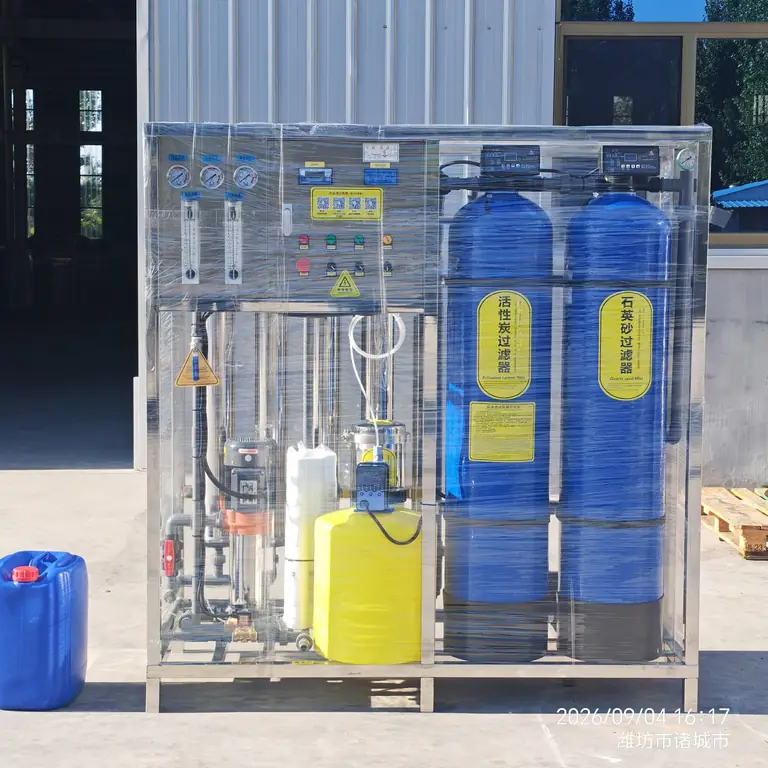
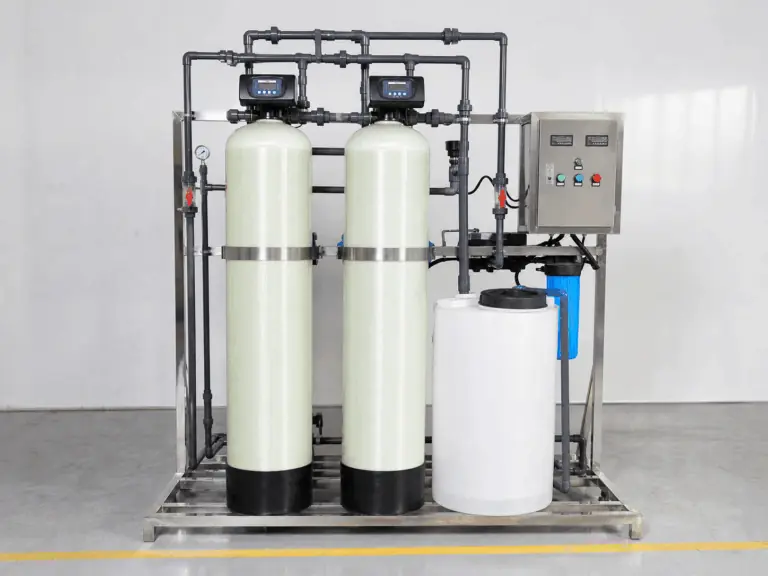
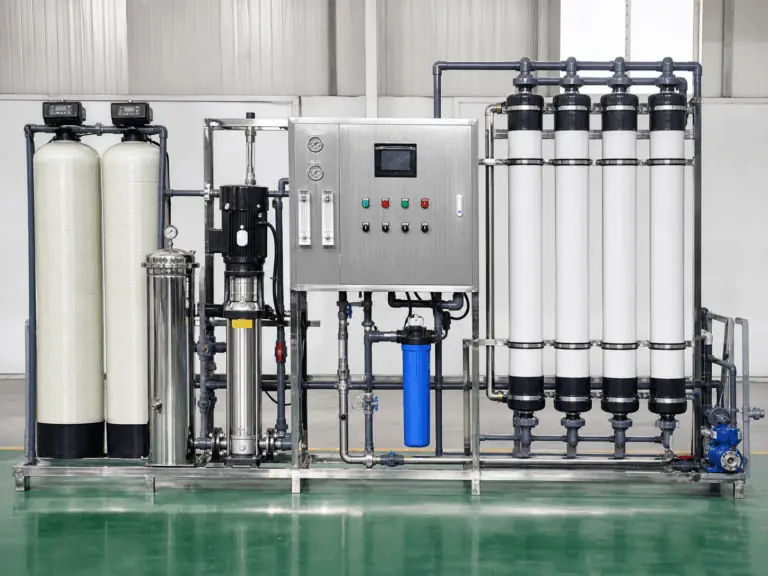
Liangpu water treatment equipment covers industrial RO systems (0.25–10 T/h reference models), simplex and duplex water softeners and pure-water systems, including feed-water treatment for steam generators.
Industrial RO Water Treatment Systems
Reference models from 0.25 to 10 T/h, 4T/6T/8T configurations and 40 T/h ultrafiltration equipment.
Industrial Water Softeners
Simplex and duplex softeners that reduce hardness and control scale in boilers and steam generators.
Industrial Pure Water Systems
Pure water for process use, rinsing, cleaning and food-processing support, configured to the target water quality.
Water Treatment Guides
- 4T vs 6T vs 8T Industrial RO: Capacity and Site Planning
- 40T Ultrafiltration vs RO: Which Process to Choose
- 3T and 5T RO Systems: Testing, Packing and Site Prep
- 2T Stainless-Steel RO System: Materials and Inspection
- 1T RO System: Factory Photo and Buyer Checklist
- 0.5T RO System: Standard, Three-Tank and Integrated
- 0.25T RO System: Three-Tank vs Compact Configuration
- Double-Stage RO and 40T Ultrafiltration Systems
- 2T to 5T Commercial RO System Delivery Checklist
- Compact RO Systems: 0.25T, 0.5T and 1T Configurations
- RO and Water Treatment Delivery: 0.25T to 40T
- 10T RO System Installation Process and Site Checklist
- 5T, 10T and 12T Industrial RO System Project Guide
- 0.5T vs 1T vs 2T vs 3T Commercial RO System: How to Choose
- Industrial RO System Maintenance Log Checklist
- Industrial RO Pretreatment Inquiry Checklist
- Industrial Water Softener Export Inquiry Checklist
- Pure Water System Export Inquiry Checklist for B2B Buyers
- Reverse Osmosis Export Inquiry Checklist
- Industrial RO Capacity Selection Checklist
- Industrial Water Treatment System Selection Checklist
- Industrial RO System for Food Processing Water
- What Affects an Industrial RO System Quotation
- Industrial Water Softener for Boilers: Simplex vs Duplex
- Industrial Pure Water System Selection Guide
- Softened Water Equipment for Boiler Protection
- Reverse Osmosis Water Treatment System Price Guide
What the water-treatment range covers
The water-treatment range is a group of industrial softeners, reverse osmosis systems and pure-water systems for your steam plant or production process. Your choice depends on whether you need hardness removal, reduced dissolved solids or water prepared to a specified quality at the point of use.
First, a softener removes calcium and magnesium hardness by ion exchange, while leaving total dissolved solids unchanged. Second, RO reduces dissolved solids, with standard nominal output options including 0.25 and 10 T/h; actual output varies with feed-water quality and temperature. Third, a pure-water system uses RO as its core process, with optional pretreatment and post-treatment selected around your required water quality at the point of use. For example, a commercial laundry can have its water-treatment requirements assessed alongside the steam equipment serving washing machines, ironing tables and garment-finishing equipment.
Which treatment process matches which water problem
A treatment process is a method selected to address a particular water problem, such as hardness or dissolved solids. You should compare your raw-water analysis with the quality required by your connected equipment, because softening and reverse osmosis perform different tasks and cannot be treated as interchangeable processes.
First, select softening when hardness removal is required, remembering that heating and evaporating hard water forms scale on heating surfaces and inside pipework. Second, consider RO where dissolved solids must be reduced; the reference raw-water inlet pressure for these systems is 0.1-0.3 MPa. Third, assess suitable membrane pretreatment, which can involve filtration, softening or antiscalant dosing to address scaling and fouling, with optional post-treatment depending on your target water quality. For example, a production process requiring reduced dissolved solids can be assessed for an RO-based pure-water system.
How capacity is selected for a water-treatment system
Water-treatment capacity is the output or flow required to serve your connected equipment during its operating period. You should send daily demand, available operating hours and peak flow requirements so that selection reflects when water is needed, alongside the raw-water conditions that affect treatment output and softener regeneration.
First, divide your daily treated-water requirement by the hours available for water production to establish an hourly requirement for assessment. Second, compare that requirement with peak demand and connected equipment; RO standard nominal capacities include 1, 2 and 3 T/h, but actual output varies with feed-water quality and temperature. Third, select softener capacity using hardness, required flow, connected equipment and regeneration cycle, including whether water must remain available during regeneration. For example, a commercial laundry should send its daily washing volume, equipment list and peak operating period.
How water treatment supports a steam generator or boiler
Water treatment is a feed-water preparation process that addresses hardness or dissolved solids before water enters your steam generator or boiler. You should check the incoming water and connected equipment requirements because scale forms as hard water is heated and evaporated, insulating heating surfaces and accumulating inside pipework.
First, assess hardness removal to address calcium and magnesium in the feed water, while recognising that a softener does not reduce total dissolved solids. Second, check whether RO is needed to reduce dissolved solids, with suitable pretreatment for its membranes. Third, match treatment flow and regeneration arrangements to your steam equipment; the electric steam generator range has rated steam outputs of 4-500 kg/h, which must be considered alongside your water requirements. For example, a garment-finishing installation can have its feed-water treatment assessed together with its electric steam generator.
What water analysis to send before a quotation
A feed-water analysis is a record of the incoming water chemistry used to assess treatment requirements for your site. You should send it with your water source, temperature and seasonal supply information, because process selection depends on both the substances present and the conditions under which the equipment operates.
First, send total hardness, TDS or conductivity, pH, chloride, iron and manganese, together with silica and turbidity where available. Second, identify whether your supply is municipal, well or surface water, and report water temperature and seasonal changes so these conditions can inform selection. Third, include your required output and target water quality; the RO reference membrane inlet pressure is 0.6-1.0 MPa, a separate parameter from water chemistry. For example, a steam plant using well water can submit its analysis alongside the connected boiler details and required treatment flow.
How steam and water-treatment equipment are quoted together
A combined quotation is a project-specific assessment of your steam equipment and the water-treatment system needed to serve it. You should submit the steam demand, connected equipment and feed-water analysis together so that treatment process, required flow, regeneration arrangements and electrical supply can be considered within the same enquiry.
First, provide your steam equipment list, required steam output and operating pattern, including which machines run simultaneously during peak periods. Second, send the water analysis, source, temperature and required treated-water quality so that softening, RO or a pure-water configuration can be assessed. Third, confirm your electrical supply and installation arrangement; standard RO models rated 1 T/h and above use 380 V / 50 Hz, while steam equipment electrical requirements are confirmed at quotation. For example, a commercial laundry can request steam equipment and water treatment together for washing and garment finishing.
Frequently asked questions
Which water-treatment system do I need for my site?
Your choice depends on your incoming water and the quality required at the point of use. A softener removes hardness, while RO reduces dissolved solids. Pure-water systems use RO with optional additional treatment. Send your water analysis, required flow and connected equipment details so the process can be assessed.
Do I need both a softener and a reverse osmosis system?
You may need both, depending on raw-water hardness and your required treated-water quality. A softener removes hardness but leaves total dissolved solids unchanged. RO reduces dissolved solids, and its membranes require suitable pretreatment. Your water analysis helps determine whether softening, filtration or antiscalant dosing is appropriate before RO.
What capacity range do you offer for RO systems?
Standard RO models have nominal outputs from 0.25 to 10 T/h, including a 1.5 T/h option. Larger 12T, 15T and 30T frames and double-stage systems are also available. Model numbers refer to nominal hourly output. Your actual output varies with feed-water quality and water temperature, so send both for assessment.
Can water-treatment equipment be supplied together with a steam generator?
Water-treatment equipment can be quoted together with a steam generator for your project. Send your steam demand, connected equipment, operating pattern and feed-water analysis. Treatment selection considers required flow and water quality, while softener regeneration arrangements depend on whether your site needs softened water continuously during its operating period.
What water tests should I arrange before asking for a quotation?
Arrange tests for total hardness, TDS or conductivity, pH, chloride, iron and manganese. Include silica and turbidity where available. Send the results with your water source, water temperature and any seasonal supply changes. Your required treated-water quality and connected equipment details are also needed to assess the treatment process.
How is a water-treatment system sized from daily demand?
Divide your daily treated-water demand by the hours available for production to establish an hourly requirement. Send peak flow and connected equipment details alongside that calculation. RO output varies with feed-water quality and temperature. Softener selection also depends on raw-water hardness and the regeneration cycle required for your operating pattern.
See also: Steam Equipment · All products · Send an inquiry (yeyiyulong@163.com, WhatsApp +852 5762 0371)