Choosing between a 4T, 6T and 8T industrial reverse osmosis system is not simply a matter of selecting the largest nominal flow. The right configuration depends on required daily treated-water volume, available operating hours, feed-water quality, peak demand, site utilities and the equipment included in the quotation.
This guide uses Liangpu’s 4T/h, 6T/h and 8T/h reference configurations as planning examples. Final output, recovery, membrane selection, pretreatment and power requirements are confirmed against your water analysis and acceptance conditions.
Compare the main industrial RO product range or send your water source and capacity requirement for a project-specific configuration.

4T, 6T and 8T RO Capacity at a Glance
Capacity labels are in tonnes of water per hour. For initial water-volume planning, one metric tonne of water is approximately one cubic metre, but the agreed quotation should define the rated flow and the conditions under which it is measured.
| Reference size | Nominal hourly output | Theoretical output in 8 operating hours | Main planning question |
|---|---|---|---|
| 4T/H | Approximately 4 m³/h | Approximately 32 m³ | Can the daily requirement be met without running too close to full available time? |
| 6T/H | Approximately 6 m³/h | Approximately 48 m³ | Does the project need more production margin or fewer operating hours than a 4T system allows? |
| 8T/H | Approximately 8 m³/h | Approximately 64 m³ | Can the feed supply, drainage, power and site layout support the larger flow? |
These daily figures are simple nominal-flow calculations, not guaranteed production totals. Allow for start-up, flushing, maintenance, cleaning, feed-water changes and periods when demand is higher than the daily average.
Start With Daily Demand, Not the Model Name
Calculate the treated-water requirement for the busiest realistic production day, then divide it by the net hours available for RO operation. For example, a process requiring 40 m³ per day within eight net operating hours has a theoretical average requirement of 5 m³/h. A 4T/H reference system would not meet that target within the available time, so a 6T/H configuration becomes the more appropriate starting point for review.
The calculation should also include any treated water needed for equipment rinsing, cleaning, boiler make-up, product changeovers or other supporting operations. If demand occurs in short peaks, the design may use a treated-water tank and distribution pump rather than sizing the RO unit only around the peak draw.
When a 4T/H Reference System May Fit
A 4T/H system is a reasonable starting point when the verified hourly and daily requirement remains comfortably below its rated production window. It may suit a site that can operate the RO system for longer periods and store treated water for later use.
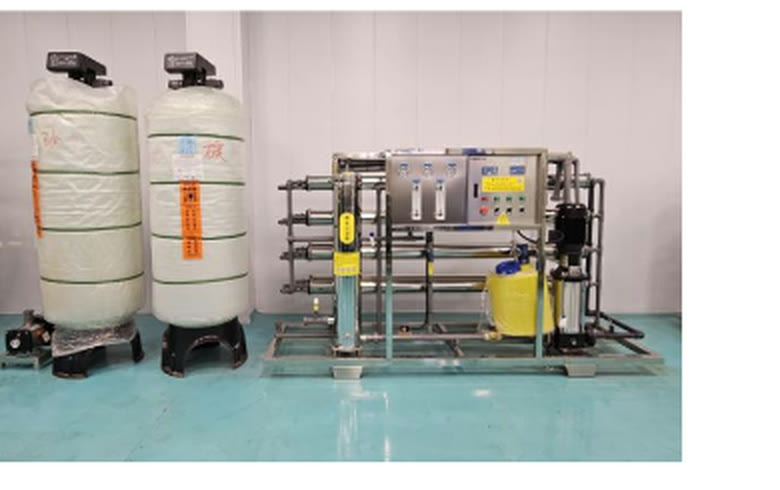
The 4T/h reference configuration uses a split arrangement with separate pretreatment vessels and an RO skid. This type of layout requires space not only for the equipment footprint but also for media servicing, cartridge replacement, membrane access and the connecting pipework.
Why Buyers Consider a 6T/H System
A 6T/H configuration fills the capacity gap between smaller commercial systems and larger 8T or 10T project equipment. It can provide additional production margin where a 4T system would need to operate for most of the available shift.
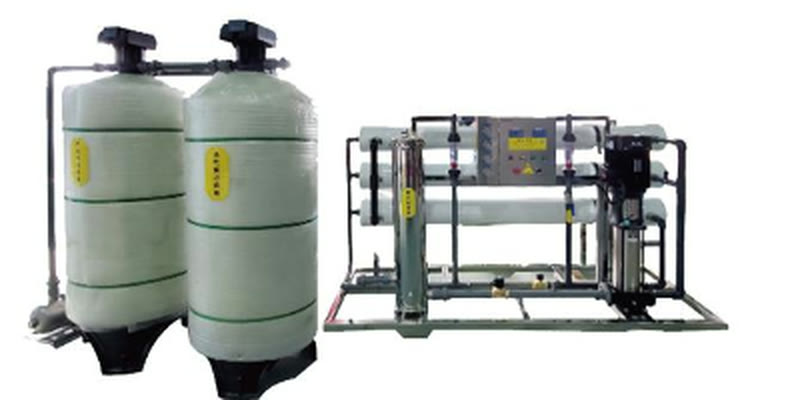
Do not select 6T only from the nominal number. Confirm that the raw-water supply can maintain the required feed flow and pressure, and that the site has adequate concentrate and backwash drainage. The connected electrical load, motor starting method and local voltage also need to be stated in the final offer.
What Changes When Moving to 8T/H
An 8T/H system can reduce the production time needed for the same daily volume or support a higher treated-water demand. The larger capacity also makes site engineering more important. Feed-water storage, pretreatment loading, piping diameter, membrane quantity, pump selection, cleaning access and unloading arrangements can all change.
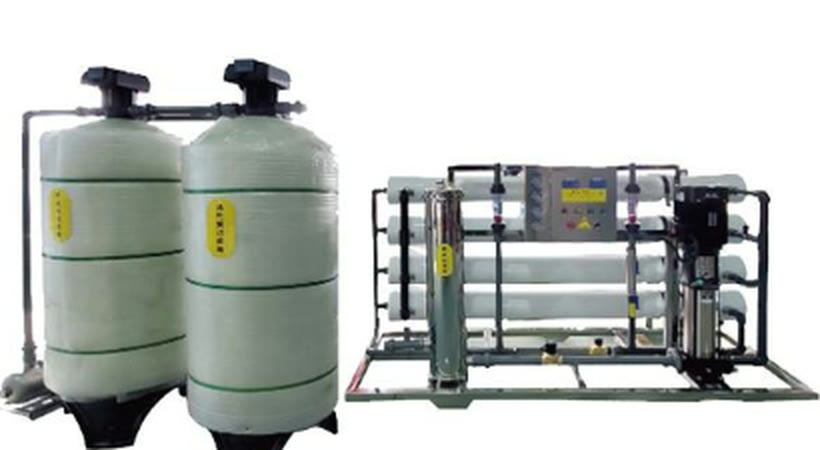
The reference configurations are listed at 380 V / 50 Hz, with pressure and salt-rejection planning values. For an export order, we confirm your local power supply, feed-water test results, membrane design basis and the agreed performance test before production.
Configuration Items That Matter More Than Capacity Alone
- Feed-water analysis: conductivity or TDS, hardness, turbidity, iron, manganese, silica, chlorine, temperature and other relevant contaminants.
- Pretreatment: media filtration, activated carbon, softening or antiscalant dosing, and cartridge filtration selected for the feed water.
- RO section: membrane type and quantity, pressure vessels, high-pressure pump, instruments, controls and cleaning provisions.
- Storage and distribution: raw-water and treated-water tanks, level controls and delivery pumps, including whether each item is supplied separately.
- Materials: frame, pressure piping, product-water piping and wetted components appropriate for the required water quality and operating environment.
- Export scope: packing, spare parts, documents, shipment terms, installation support, commissioning and written warranty terms.
Information to Send for an Accurate Quotation
- Water source and a recent feed-water report, if available.
- Required treated-water volume per hour and per day.
- Final water use and any required conductivity, TDS or process standard.
- Available operating hours and whether demand is continuous or intermittent.
- Destination voltage, phase and frequency.
- Available floor area, access-door dimensions and maintenance clearance.
- Requirements for tanks, distribution pumps, dosing, softening and remote monitoring.
- Destination country, delivery location and preferred shipping terms.
A model-only request cannot produce a reliable comparison because two systems with the same nominal output can include different pretreatment, membrane, pump, control and delivery scopes. See the industrial RO quotation guide for the main cost variables.
Frequently Asked Questions
Is 4T/H the same as 4 m³/h?
For preliminary water-volume calculations, four metric tonnes of water per hour is approximately four cubic metres per hour. The quotation should still define the rated flow, feed conditions, recovery and test method.
Should I choose the next larger model for safety?
Some production margin is useful, but unnecessary oversizing can increase equipment, power and maintenance costs. Size the system from peak daily demand, net operating hours, storage strategy and verified feed-water conditions.
Does every 4T, 6T or 8T system use the same components?
No. Pretreatment, membranes, pumps, instruments, controls and materials can change according to the feed water, outlet requirement, destination utilities and buyer-specified brands.
Is the reference configuration the final technical specification?
No. It is a starting point for discussion. The signed quotation or technical agreement should identify the included equipment, design basis, confirmed utilities, packing scope and acceptance criteria.
Request a Project-Specific Configuration
Send your daily and hourly water requirement, source-water information, application, destination power supply and available installation space. Liangpu can then compare the appropriate reference capacity and prepare an itemized configuration for review.
Request an industrial RO configuration and quotation · Review larger 5T, 10T and 12T project planning
Related equipment
Industrial RO Water Treatment System · Industrial Pure Water System
Need help sizing a system for your site? Send us your inlet water analysis (TDS/hardness) and required capacity via WhatsApp or email and we’ll reply with a proposal.
WhatsApp +852 5762 0371 Email yeyiyulong@163.com or use the inquiry form